
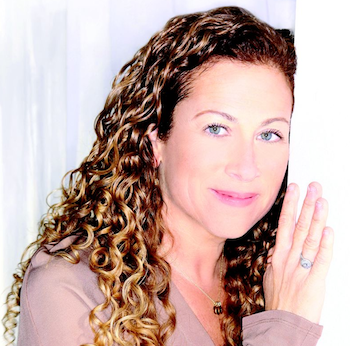
It’s a bit intimidating to find yourself on the other end of the telephone with one of the top-selling novelists in the world. But when she’s as bubbly, personable and unassuming as Jodi Picoult, you quickly forget about her multiple No. 1 best-sellers and find yourself enjoying the chat as if you were longtime pals catching up on old times.
Picoult’s novels My Sister’s Keeper, Vanishing Acts, The Tenth Circle, House Rules, Handle with Care and Lone Wolf are just some of her New York Times best-sellers. But we’re not talking about her admirable achievements, impressive academic credentials or numerous honors and awards today. What brings us together today is her newest book, scheduled for release Feb. 26. Called The Storyteller, it’s about a beloved 90-year-old man, Josef Weber, and his unlikely friendship with Sage, a young woman who works in the local New Hampshire town’s bakery. Josef has a strange request for Sage: to help him die. “It’s what I deserve,” he confesses, and brandishes a photo of himself in an SS officer uniform. Complicating things just a wee bit more is the fact that Sage’s grand- mother, Minka, a Holocaust survivor, has a surprising connection to Josef.
Sage struggles to comprehend her grandmother’s story of survival and how she was able to live a peaceful and productive life after the brutality and horrors she endured at the hands of the Nazis. But Sage also is plagued by how a respected elder who coached Little League and taught German at the local high school could have committed acts of unthinkable evil. In The Storyteller Picoult takes readers into the mind of a Nazi, offering his own rationale to justify his acts of horror. She also draws us into the heart of a remarkable survivor whose path to forgiveness has taught her how to go on living.
Picoult did extensive research for this novel here in the Valley. She spoke with several survivors as well as Paul Wieser, a local Holocaust historian and Mandel fellow of the U.S. Holocaust Memorial Museum. Picoult’s parents heard Wieser speak at a Jewish film festival in town and asked if he would meet with their daughter on her next visit. Weiser said his first conversation with Picoult was wonderful. “The next thing I knew she was over at the house, and we spent hours talking about the history, possible story lines, viewing photos …”
Wieser explains that Picoult eventu- ally connected with Peter Black, head historian at the USHMM. He helped her enormously with details and accuracy. Picoult also worked with someone in the special investigations office – a real live Nazi hunter, whose job it is to find and prosecute former Nazis.
According to Picoult, the road to prosecution is tough, since you cannot prosecute genocide in this country unless perpetrated by Ameri- cans against Americans. “The only way to punish former Nazis is to catch them on immigration violations,” she explains. “Then you can extradite them and hope that their home country prosecutes them.” Picoult also spoke with several local survivors. “Every single
Holocaust survivor is inspiring,” she insists. But she especially connected with Mania Salinger, spending the most time and effort getting to know her story. “Mania reminded me so much of my grandmother,” says Picoult. “I’m so grateful she allowed me to rifle through her memories.” Picoult says she and Salinger have become good friends, and she praises Salinger for her commitment to telling her story to young people and speaking to school groups.
One of Picoult’s greatest compliments on The Storyteller came when she sent Salinger several chapters of an early manuscript to read. Salinger read the first chapter about the Jewish ghetto and had to put it down before going on. “She told me it was too real,” says Picoult. “She had to work up the courage to read the second chapter.”That gave Picoult faith that she had accurately depicted the horrors of that devastating period in history.
The Storyteller raises questions about the absolute nature of good and evil. According to Picoult, “No one is ever black and white. There are always extenuating circumstances. You can’t look at good or evil in a vacuum. You have to see the world as it is.” Picoult’s research has also taught her to avoid absolutes and generalizations about any group. “It’s a mistake to assume that all Nazis were evil. There were individuals who did something to save lives.” She also points out the error of the belief that Nazis who refused to kill Jews were shot for insurrection. “That’s just not true,” Picoult recounts, “a Nazi wouldn’t have been shot on the spot if he said no to harming Jews.”
Picoult was raised in a Jewish family but doesn’t consider herself a practicing Jew. She did have relatives who died in the Holocaust. Beyond her personal connection, however, Picoult was drawn to the subject through Simon Wiesenthal’s compelling book, The Sunflower, in which Wiesenthal recounts his experience in Lemberg Concentration Camp in 1943, when he was sum- moned to the bedside of a dying Nazi to offer forgiveness for the man’s heinous crimes against Jews. Wiesenthal’s book sparked religious and philosophical debate about whether or not someone who commits brutal acts of hatred and violence can ever be forgiven.
For Picoult, “The Holocaust represents the greatest act of evil in our history.”Thus it provided a perfect environment to explore the issues of good versus evil and forgiveness. While Picoult admits to having a personal connection to the subject because of her Jewish heritage, she reminds us, “Jews were not the only victims of the Holocaust’s genocide. Lots of other people were grievously affected by the Nazi regime.”
The relevance of hatred is still palpable for Jews and people throughout the world. No one knows that better than the Anti-Defamation League, which fights anti-Semitism and all forms of bigotry in the U.S. and abroad through information, education, legislation and advocacy. The ADL has joined Congrega- tion Beth Israel to promote Picoult’s visit to Phoenix on Sunday, March 10. She will speak at Congregation Beth Israel from 1 to 3 pm. ADL is sponsoring a pre-event private reception.
Bill Straus, Arizona Regional Director of ADL, says, “We are connected to Jodi Picoult both through her parents (who live here) and through the ongoing education ADL does with regard to the Holocaust. Ms. Picoult’s research for this book included a survivor who lives here in the Valley, and also Paul Wieser, who for years was our director of education here. As one of this region’s most knowledgeable authorities and educators on the Holocaust, Paul’s contribution to the writing of the book created a natural tie to the work we do in this area.” ␣
Debra Rich Gettleman is freelance writer and blogger based in Phoenix.
Best-selling author Jodi Picoult speaks on her new novel, The Storyteller
TUCSON
Tucson Festival of Books
March 9, 1 pm at University of Arizona; Student Union, Ballroom, 1303 E. University Blvd., 2nd Floor
Contact: 520-954-3300
PHOENIX
March 10, 1-3 pm at
Congregation Beth Israel,
10460 N. 56th St., Scottsdale Contact: 480-947-2974
Pre-event: Private reception hosted by ADL: 602-274-0991