
“Mom, I have my idea for a mitzvah project,” my 12-year-old son, Levi, exclaims.
“But you’ve already done a mitzvah project,” I object. “You’ve been voluntarily running the ‘Clean up the Park’ field trip at the temple preschool for the past seven years. You teach the 4-year- olds all about beautifying our community, giving back and recycling. Your mitzvah project is a real-life project. What are you talking about?”
Then it hits me. My fear of yet another added responsibility actually has me dissuading my child from doing good – and I haven’t even heard the topic yet. I pull back and breathe. “So, what’s the idea?” I ask calmly.
“I’m going to make a documentary about Holocaust survivors and put it on a website for kids my own age, so that they will have the chance to see and hear these people’s stories for themselves. Because Mom, once these people are gone, their stories will be too, and it’ll be too easy for the next generation to believe the Holocaust never happened. I have to do this, Mom.” I admit I still had a sinking feeling in the pit of my stomach as I contemplated the amount of work this project would inevitably entail. But I am happy to report that my overwhelming pride and respect for my “soon to be a man” son took over and nudged me forward. “That sounds incredible,” I say. “Let me know how I can help.”
Over the next few weeks, Levi googled, called and wrote endearing personal notes to many survivors. It wasn’t easy and he met with many frustrations and roadblocks. I tried hard to stay interested but detached. After all, this was his project. Finally, he came to me with a list of scheduled interviews and asked if my husband and I would be willing to run the camera and sound recorder as his assistants.
We spent the next three weeks interviewing some of the most remarkable people we have ever met. Bone-chilling tales of desperation and unthinkable violence haunted our family as we learned firsthand about the personal loss and unimaginable pain these resourceful people were forced to endure at the hands of the Nazis during World War II. At times, I wanted to stop the interviews and say, “Enough! Please. He’s only a boy.” But deep in my heart I knew that contemplating and facing these atrocities was the only way to ensure they never happen again.
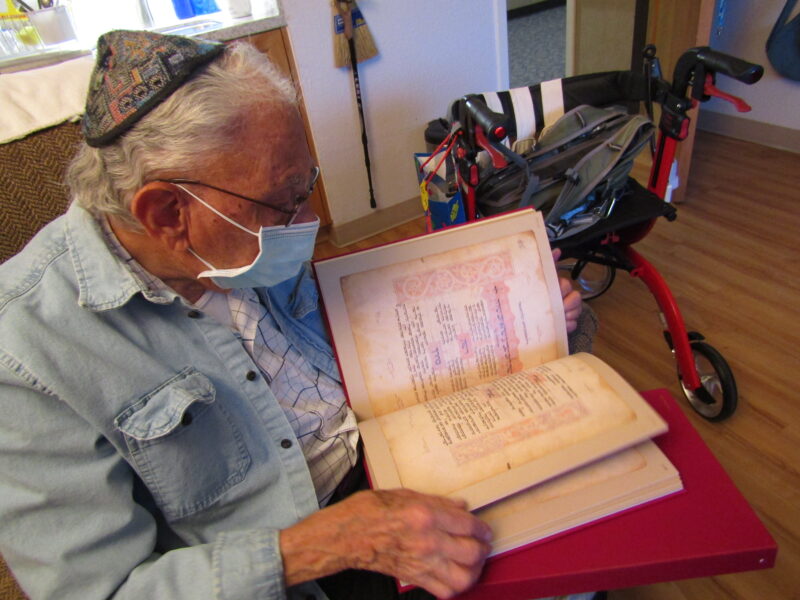
We spoke to a variety of survivors – some who had made it their life’s work to share their stories with others. One survivor told us that her unwavering commitment to tell her story was her way to prove to God that He hadn’t made a mistake by letting her live. Another man told us extraordinary tales of survival and of personally being saved by Oskar Schindler himself. But my son’s greatest accomplishment was convincing one octogenarian, who had never shared a word of her story with anyone, to sit down and tell her story on camera so that her voice would be heard for generations to come. She confided to him that she had actually turned down Steven Spielberg when approached years earlier. But Levi’s personal plea and dedication made her realize that she couldn’t allow her story to be lost with her eventual passing.
One disturbing general theme that emerged during the interviews was that although many survivors actively seek out occasions to publicly tell their stories in schools and religious institutions, they find the opportunities to speak in front of young Jewish audiences to be the scarcest of all. Numerous times we were told that Jewish day schools and Hebrew schools don’t invite survivors to speak because the topic is too disturbing, too graphic and gruesome.Yet these same speakers are regularly booked at Christian schools, public academic institutions, even on many Native American reservations. According to those who spoke with us, Jewish parents want to protect their children from the hideous realities of the Holocaust.
Believe me, I get that. This has been hard for us as a family. It has raised issues for both my 9-year-old and 12-year-old sons that I wasn’t ready to face. It has prompted questions about bigotry, hatred and evil from which I would have preferred to safeguard them. But these stories must be shared openly, honestly and directly with our Jewish children and grandchildren. I’m not suggesting every family immerse themselves in Holocaust history as we have done. But I do urge parents and school administrators to seize what fleeting opportunities remain to bring together Jewish children and these indomitable elders who have much to teach us about faith, perseverance and commitment to life.
So many moments remain with me after meeting these wonderful and open souls. But if I had to pick my most memorable, it would be when we were leaving the home of Helen Handler, a noted Holocaust speaker and survivor. We did not capture this moment on tape. As we said good-bye, Helen held fast to Levi’s shoulders and looked deeply into his eyes. She handed him a copy of a letter she had written to a child that was published several years ago in a local Jewish newspaper. “You will give this letter to your children as proof,” she told him. “And you will tell them that this happened. That it was real. That you touched me.”Then we said one more tearful good-bye and departed, knowing that our lives had changed and that they would never be the same again.