
Increase your blessings just by adjusting your attitude.
It’s early in the morning, traffic is terrible and I am racing across town to make it to my 7:30 yoga class on time. As I run breathlessly into the room, I smile at the irony of entering a space where mindfulness of breath is at the heart of the practice. I sit on my mat, close my eyes and chant the “Om” with the others in my class. My breathing becomes noticeably slower, although my mind is still bouncing around, wondering if I locked my car and turned off my cellphone.
My teacher reads a poem by Robert Louis Stevenson and asks us to dedicate our yoga practice today to something that is important to us. I drink in a long breath, feeling the air circulate up through my nose, spreading deep into my lungs. I release a long, slow exhale, aware that less than a year ago I was unable to do this. The sinus surgery I had once dreaded made it possible for me to now breathe fully. The word “gratitude” enters my mind.
Gratitude is appreciation for what we have that is good in our lives. From the moment we wake up in the morning, we have things to be grateful for. A good night’s rest in a warm bed, waking up in a safe place, a job to go to or a family to feed. Simple things that we often overlook and take for granted.
In Hebrew, “gratitude” is hakarat ha tov, which means “recognition of the good,” especially recognition of the good things that others have done for us. Hakarat ha tov is meant to make us feel good about ourselves. It requires us to stop, look around and remember the times in our lives when others were there for us because they cared or appreciated us. When we recognize that a busy friend set aside time to help us or that our boss gave us a bonus because he or she values our work, we feel worthy, valued and loved. Simply put, cultivating gratitude is one way to become a happier person.
I love the word gratitude because it contains another word within it (although slightly misspelled) which is at the heart of gratitude itself: attitude. So much of our ability to feel grateful for things lies in our attitude about life. Everyone experiences difficult times: poor health, failed relationships, financial stresses or family strife can make it very hard to feel upbeat and grateful. While we can’t always choose what happens to us, we can choose how we feel about it and how we respond. As my father says, “When things are tough, you can have a good attitude or a bad one for the same nickel.”
Gratitude requires us to make the choice to be conscious of what we have, rather than what we lack. It asks us to see the glass as half full rather than half empty. One way to develop gratitude is to take time each day to acknowledge what we have that is good in our lives at that very moment. Then, and this is the hard part, to say it aloud — to ourselves and to others to whom we are grateful. It may be as simple as acknowledging that we have just read a good book or thanking a teacher for a wonderful class or telling a friend how happy we are to have lunch with her. It is this conscious and articulated awareness of what we have that can bring us joy for the daily blessings in our lives.
The Jewish tradition tells us that we should say 100 blessings every day. Some are traditional blessings that we say upon waking, eating and praying. Others are spontaneous and require us to stay open to the good around us that deserves our praise. Articulating what we are grateful for is a mitzvah because it is tantamount to saying a blessing.
It’s not always easy to find and acknowledge the good in our lives. Life has a way of bearing down on our best efforts to stay in the moment and appreciate what we have, especially when we are challenged by family issues, financial pressures, health concerns or stresses at work. But to survive as human beings, we must often hold the good in our lives together with the most stressful and difficult.
Feeling gratitude is a discipline that can be cultivated through awareness. Just as working out and physical training at a gym is necessary to develop muscle tone and a healthy body, being aware of the good in our lives requires a sort of inner training as we direct our conscious thoughts to the beauty and blessings around us.
My teacher ends class with the chanting of the “Om” and I sit, head bowed, grateful that I chose to start my day with yoga. As I roll up my mat and head back to the car, the words of the poem she read to us come back to me. “The best things are nearest you: breath in your nostrils, light in your eyes, flowers at your feet, duties at your hand and the path of God just before you.” Five blessings already and it’s only 8:30 in the morning. No doubt about it. It’s going to be a great day.
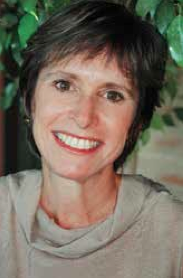
Amy Hirshberg Lederman is an award-winning author, nationally syndicated columnist, Jewish educator, public speaker and attorney.