
A MONTH OF EVENTS IN THE SPIRIT OF PURIM
by Janet arnold | Photo by Joel Zolondek
Purim is considered to be the most festive of the Jewish holidays. Some liken it to Mardi Gras or Halloween, since it is a time to dress up as characters and eat and drink with great gusto. It’s a time for great creativity, storytelling and performances. This year, Purim falls on Feb. 23-24.
The main mitzvah (commandment) for Purim is to listen to the entire reading of the Book of Esther – the whole megillah!
Esther was raised by her Uncle Mordechai, who gave her to Ahashuerus, king of Persia, to become a part of his harem. Ahashuerus found he was drawn to the beautiful Esther more than to the others and chose her as his queen, not knowing she was jewish.
Meanwhile, Haman, the king’s advisor, became increasingly antagonistic toward the Jews who would not bow down to him. He launched a plan to kill all the Jews. Finally, Esther revealed her heritage; the king realized that Haman was evil and ordered him to be hanged. The Jews avoided that possibility of extinction. And so, there is much to celebrate! The story is such a colorful one, with clearly delineated virtuous and evil competitors, making the story an inviting one to retell and embellish. Purim parodies began showing up as early as the 12th century, and thus the Purimshpiel was born. Shpiel is Yiddish for play or skit.
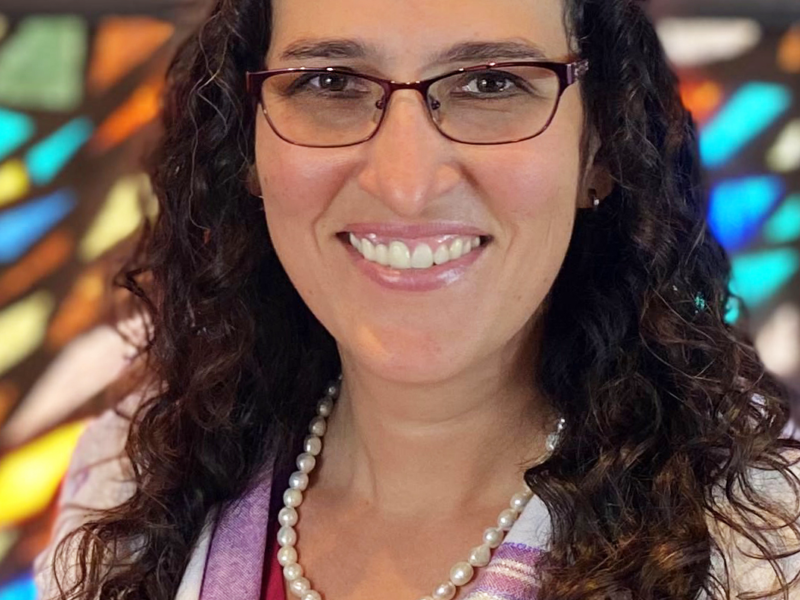
At first, contemporary religious leaders would dress as the major characters in the story – Esther, Haman, Mordechai and so on – but in recent decades, synagogues have become more and more creative in their staging of the Purim story. It is not unusual to see rabbis and cantors dressed as superheroes, Star Wars characters, rock-and- roll icons, and so forth. Rabbi Bonnie Sharfman talked of her shpiel just last Purim: “We did a parody of Jersey Boys incorporating the Megillah, titled: ‘Shushan Boys’ … picture the king singing to Esther, whom he has just chosen from the ‘beauty pageant,’ ‘You’re Just Too Good to Be True.’” The rabbi was unwilling to disclose her plans for 2013, but she did add: “I sit up into the late hours writing and usually crack myself up, hoping that it will sound good when I’m awake!” Another popular tradition at Purim time is the carnival.
The Valley of the Sun JCC in Scottsdale will be having its Purim Carnival on Sunday, Feb. 17. Beginning at 1 pm is the Hamantaschen Hip Hop Family Concert. (Hamantaschen is a fruit-filled pastry named for Haman’s three-cornered hat. The name literally means Haman’s pocket or three-cornered hat.) The concert is performed by Donna Zaslof Thomas and the Mama Doni Band. They received a 2011 Parents Choice Award for the CD, “Shabbat Shaboom,” as well as the Simcha Award for Inspiring Joy Through Music. Following the concert is the carnival itself, which will offer games, face-painting, bounce houses and more until 4 pm. You can purchase tickets in advance at 480-483-7121.
The spirit of Purim and the joy of performance is evident throughout Arizona in various venues throughout the month of February. (See Calendar listings for more events.) The annual Greater Phoenix Jewish Film Festival runs from Feb. 10 to 24, bringing 11 of the best new Jewish films from around the globe to three locations in the Valley. This all-volunteer organization exemplifies the best of what can happen when like-minded groups collaborate and join together for the greater good. In 2009 the Phoenix Jewish Film Festival and the East Valley Jewish Film Festival merged into one to bring their offerings to greater numbers of patrons throughout the entire Valley. The Festival plays at Harkins Theatres at Chandler Crossroads 12, Scottsdale Camelview 5 and Peoria Arrowhead 18. The group has also lent its support to the Israel Center, the Scottsdale Film Festival and various films at the Phoenix Art Museum, and it even has a Film in the Schools program. This year’s films range from comedies to dramas and documentaries from France, Germany, Israel and beyond. For a complete listing, to volunteer or to purchase tickets, visit gpjff.org.
As Arizona’s 100th birthday comes to a close, the Arizona Jewish Historical Society is wrapping up its year of celebrating the Arizona Centennial with a special program from 1-4 pm on Feb. 10. On hand will be Marshall Trimble, Arizona’s official state historian. Trimble epitomizes the type of Purimshpieler who would travel from town to town to tell stories and entertain the crowds. Following Trimble will be a reading of “For Better and Worse – Jewish Marriages in the Arizona Territory.” The piece was commissioned by the Arizona Jewish Theatre Company and written by Harriet Rochlin, a historian with expertise in early western Jewish pioneers. It will be performed by Janet Arnold, Cheryl Hammerman, Barbara Mark-Dreyfuss, Rabbi Bonnie Sharfman, Barbara Mehl-Goldman and Norm Goldman. Finally, AzJHS will bury a time capsule comprised of artifacts collected by students. Visit azjhs.org.
Purimshpiels were forerunners of the Yiddish theater, which in turn helped to develop the American theater repertoire. Of interest this month are two Arizona premieres with strong Jewish content and two popular hit plays back by popular demand. Each of the premieres is bold in its choice of material. Feb. 6-10 is “A Tiny Piece of Land,” a new play by local playwrights Joni Browne-Walders and Mel Weiser. They wrote the play because there didn’t seem to be many pro-Israeli works being written. The clever premise of an American brother coming to visit his brother who has lived in Israel for 20 years, allows a natural conversation to take place between the one who bases his opinions only on media reports and the other who lives the life every day. (See Arizona Jewish Life, January 2013.) Tickets are available at 602-254-2151.
The second Arizona premiere is “The Whipping Man,” showing Feb. 8-17 at the Black Theatre Troupe’s new Performing Arts Center at 1333 E. Washington. This fascinating and gripping play, written by Matthew Lopez in 2006, was produced first at Luna Stage Company in New Jersey. It had its West Coast premiere at the Old Globe in San Diego, and its New York production at Manhattan Theatre Club.
It’s a powerful period piece set in April of 1865. Lee surrenders to Grant at Appomattox and it is Passover. A wounded, Jewish Confederate officer returns to what remains of his family home in Richmond to discover two of his former slaves are still there. These slaves had long before adopted Judaism, and they are now intent on putting together a semblance of a seder. As they gather the symbols and discuss their meanings, we learn of secrets each man harbors. “Slavery and war, they discover, warp even good men’s souls.” This play will be the first at the new, state-of-the art theater, an intimate and accessible 145-seat space, with plenty of convenient, free parking. Tickets are sold through Phoenix Theatre’s box office: 602- 254-2151, option 4. The Herberger Theater Center in downtown Phoenix brings back two hit shows, “My Mother’s Italian, My Father’s Jewish, I’m Home for the Holidays” and “Respect, A Musical Journey Of Women.” (See story page 45.) Call 602-252-8497.
Whether it’s a play, a carnival or a shpiel, there’s a Purim feeling in the air this month. Feel free to eat, drink and be merry. In fact, according to the Talmud, you should drink until you can’t tell the difference between “cursed be Haman” and “blessed be Mordechai” during the Megillah reading! In addition, there is a lovely mitzvah of giving gifts of food to at least two friends (shalach manot) and giving money to the poor so they can also participate (matanot l’evyonim). Purim celebrations have evolved into culturally rich events and great family fun. Whatever their format, they maintain a centuries- old Jewish tradition connecting us to our past.